
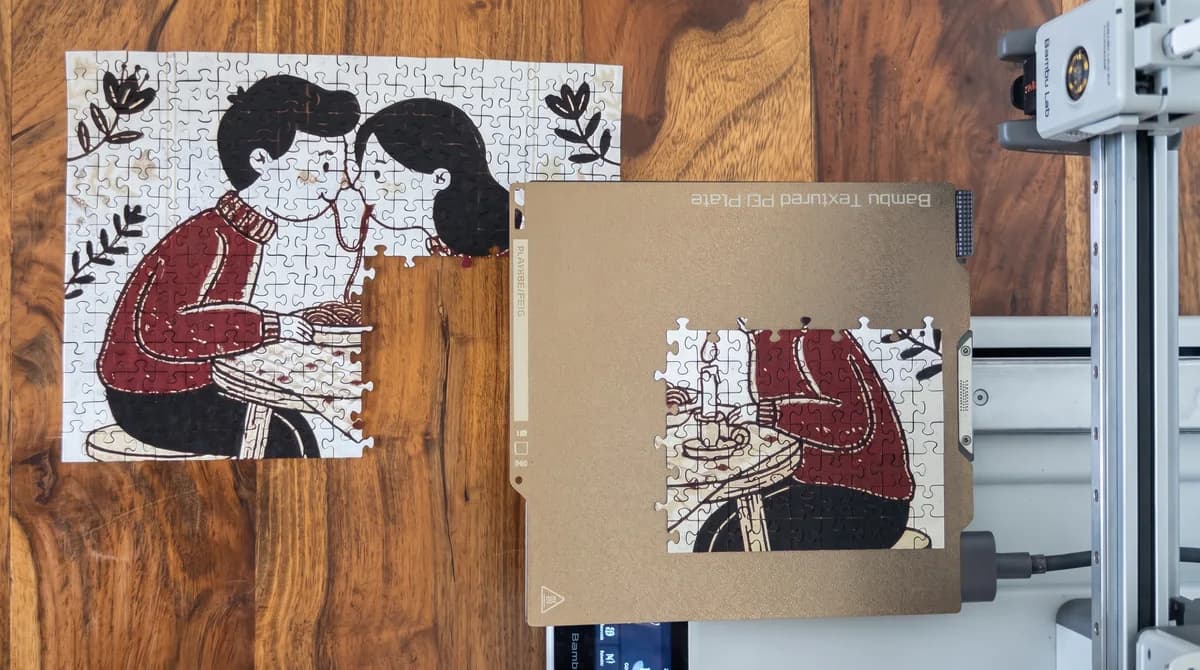
Search “3D printed advent calendar” and you get drawers. Twenty-four little boxes, a frame to hold them, forty hours of printing and a kilo of filament, finished by mid-November if you start now. They look wonderful and almost nobody finishes them.
There is another way to think about advent: not 24 containers, but 24 small reveals. A printer is good at reveals. Here are four calendar ideas ordered from least to most printing, and all four leave you with something you keep after Christmas, which the drawers rarely do.
1. The puzzle that appears one piece a day
Generate a photo puzzle with exactly 24 pieces: in the Universal Puzzle generator set the piece count to 24 (a 4 by 6 grid) on a Medium or Large size, so each piece is big enough to hold a chunk of the picture. Print it in one go, around four to six hours, and bag the pieces numbered 1 to 24.
Each morning the child adds one piece to the frame. For the first week it is colours and edges; by day 15 there is clearly a dog or a face; on the 24th the last piece completes the photo. The reveal is slow, which is the whole point of advent, and the finished puzzle stays on the shelf in January.
Two tips: choose a photo where the subject is in the middle, so the early edge pieces give nothing away, and number the pieces on the back with a marker before you bag them. The assembly board option in the generator gives the puzzle a tray to grow in.
2. Twenty-four pieces, printed one a day
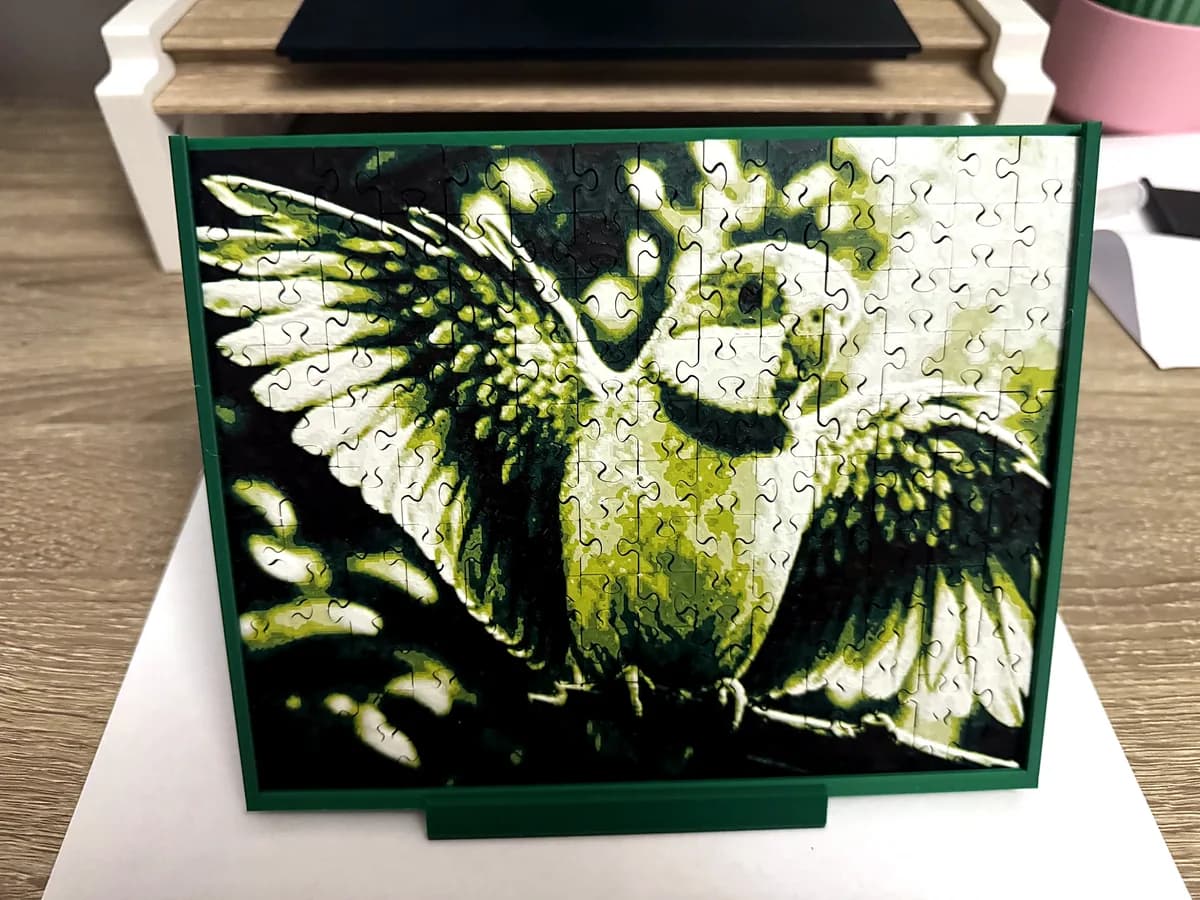
The slow version, for a printer that is on anyway. With a Premium account the generator can print any single piece of a puzzle on its own (it exists so people can replace a piece the dog ate). Print piece 1 on 1 December, piece 2 on the 2nd, and so on. Each piece takes ten to twenty minutes, and the child watches it come off the plate every morning. On the 24th the picture is complete and nobody ever opened a drawer.
3. A photo box as the big reveal
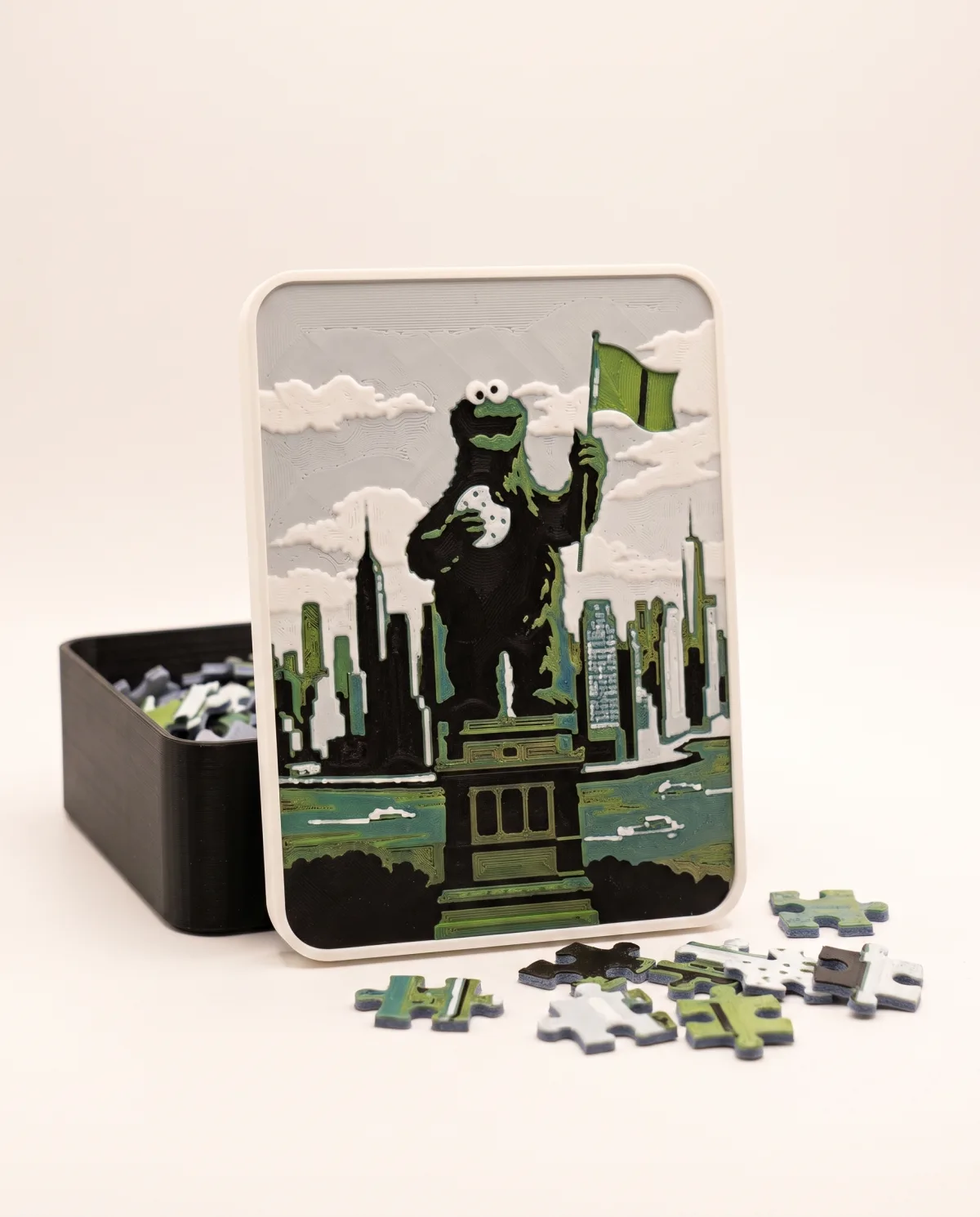
If you already have a bought or printed calendar with 24 slots, make day 24 special: a small Photo Box with the child's photo on the lid, holding the real last gift. The box prints in an evening and becomes the keepsake box for the next year's treasures. Several families we know print one box per child and reuse the same calendar frame every year.
4. Twenty-four sound bites
For grandparents far away: record the grandchildren saying one line each day in November, print each line as a tiny soundwave keychain (a few minutes of printing each), and send the set with a note: “one a day, play the recording on the phone”. Arrange the twenty-four small plaques on one build plate in your slicer and the whole calendar is a single overnight print; the recordings cost nothing.
When to start
- Puzzle calendar (idea 1): generate and print by 28 November. One evening.
- Piece-a-day (idea 2): generate by 30 November, then ten minutes a day.
- Photo box (idea 3): one evening, any time before the 24th; by 15 December if you want a second attempt at the lid colours.
- Soundwave set (idea 4): record through November, one overnight print by 30 November.
The first two generations each month are free, so a 24-piece puzzle for one child costs nothing but the filament, about 40 g. The print times guide has the full table if you are planning several.